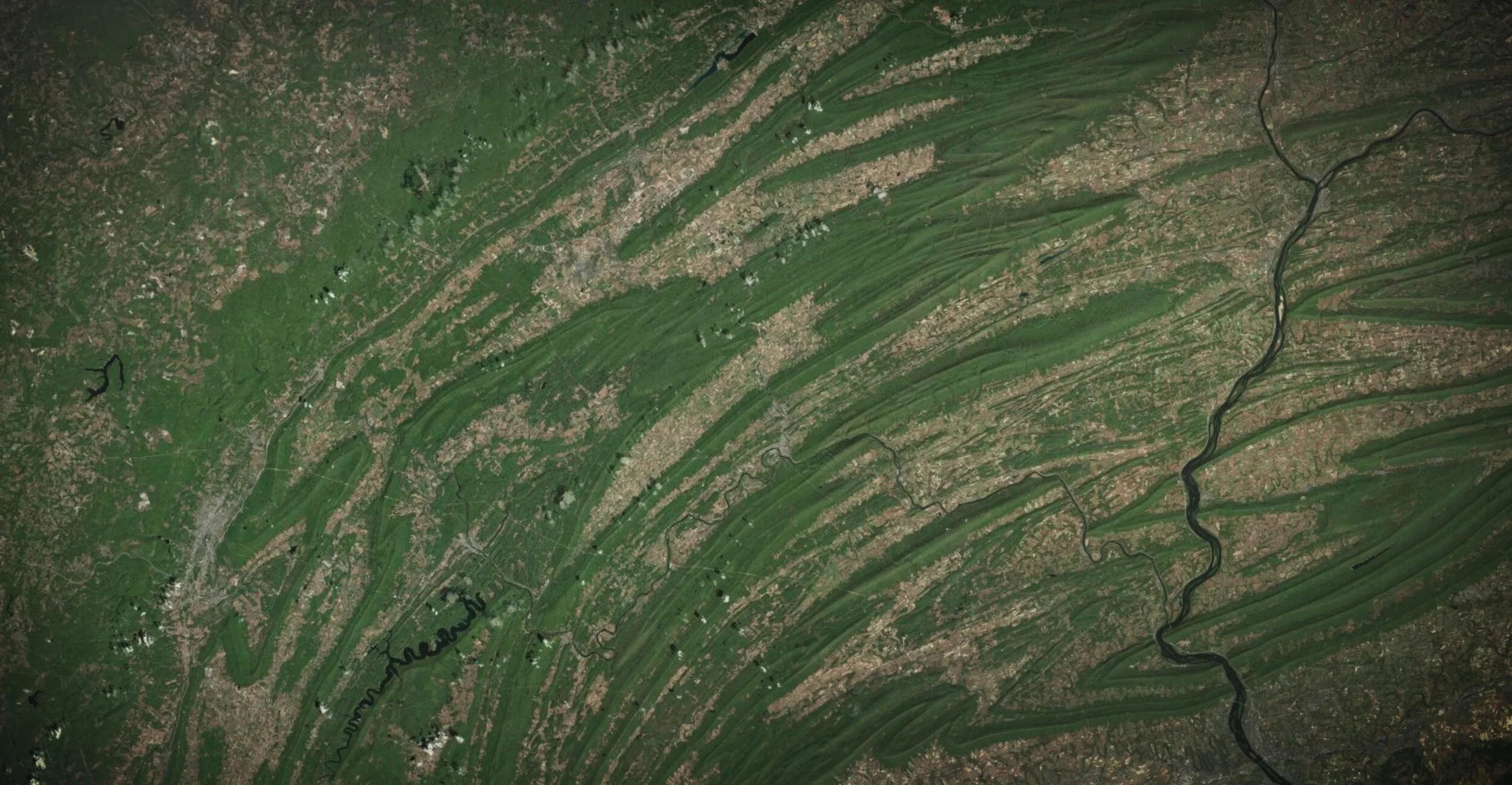
The world is more or less beautiful.
So the question becomes: is it more beautiful, or less beautiful … because of our contribution?
My guess is that it’s more beautiful.
And — we can act intentionally to make certain.
The world is more or less beautiful.
So the question becomes: is it more beautiful, or less beautiful … because of our contribution?
My guess is that it’s more beautiful.
And — we can act intentionally to make certain.
Last night, while I was walking my dog, a car backfired. It was a long way off and barely audible. But my dog took notice and his anxiety went to work.
Instead of our usual route, he took an immediate hard turn, pulling me straight back to the house. I tried to coax him on, reassuring him it was safe. But he had made up his mind: we were headed back home.
The experience reminded me of how sometimes, just a little hint of fear can turn us toward home where it’s safe — and where we can hide.
A rejected paper. A lukewarm reception. A critical review. A reactionless post.
These can easily short-circuit our confidence.
But sometimes the noise is just the noise.
Sometimes, we need to tell ourselves, “We can keep going. We’re safe. We don’t need to turn back.”
To sign up for creativity is to sign up for messy.
Creation itself — as ordered as it is — is messy.
And of course, we can (and should) create order.
But we need to make room for messes, too.
When we’re able to sink in, it’s a good thing.
When we feel like we’re sinking, it doesn’t feel good at all.
In the former, we have a sense of home. A sense of grounding. We’re comfortably present.
In the latter, we have none of that — only an increasing sense of overwhelm.
Curiously, one of the ways to overcome the feeling of sinking is by sinking into something.
We are all participants in creation. Co-authors of the universe. Contributors of consequence.
But like members of a symphony orchestra, we don’t always play the melody. And there are movements and interludes when we don’t even play at all.
Rests by design.
Indeed, our occasional silence can be a contribution, too.
There are many occasions when quitting is best.
But sometimes we need to see a journey through to the end.
And it’s not always for the sake of the destination.
At times, it’s because we need the reminder that we can do hard things.
“I can do this” is a phrase that needs regular polishing.
Mistakes are inevitable. But they don’t need to be the start of a trend.
Follow-on errors — that flow from a response to the first error — those are mental mistakes.
Learn to calm your headspace. Learn to reset your emotions.
Eliminating mistakes is impossible. Stopping yourself from spiraling is a skill.
A year before his death, Steve Jobs sent this email to himself. It resonates deeply.
* * *
From: Steve Jobs, sjobs@apple.com
To: Steve Jobs, sjobs@apple.com
Date: Thursday, September 2, 2010 at 11:08PM
I grow little of the food I eat, and of the little I do grow I did not breed or perfect the seeds.
I do not make any of my own clothing.
I speak a language I did not invent or refine.
I did not discover the mathematics I use.
I am protected by freedoms and laws I did not conceive of or legislate, and do not enforce or adjudicate.
I am moved by music I did not create myself.
When I needed medical attention, I was helpless to help myself survive.
I did not invent the transistor, the microprocessor, object oriented programming, or most of the technology I work with.
I love and admire my species, living and dead, and am totally dependent on them for my life and well being.
Sent from my iPad
* * *
HT: DLG
When you’re in the midst of fog, you can’t solve your visibility issue by looking more intently. The way to see what’s ahead is to keep moving. With care, perhaps, but not by standing still.
“I can’t wait!”
The unusual thing about this phrase — when we’re honestly excited about a thing — is that we’re saying we can’t do the very thing we must do.
And curiously, the shift from discomfort to peace is a matter of doing less, not more. Because time moves at its own pace without our participation. So our job — as it so often is — is to manage ourselves and to let time do what it unchangeably always has.
“What got us here won’t keep us here.”
This is such a difficult transition. Because what we did worked!
So to recognize — and more, to accept — that it won’t continue to work … that’s tough.
It almost feels like a betrayal.
But it’s not.
As our world changes, so do the challenges we face.
Often, that means we need to change, too.
Today’s story isn’t always written with the pen we’ve come to know.
How long does it take to install a dishwasher?
Three hours.
And, of course, this only applies to one situation (mine) at one time (last night) with one particular model.
Because other installations could take thirty minutes. And others, six hours.
Like so many things, it depends. And like so many things, the only sure way to know is by doing.
All the more reason to build slack into the schedule and to build patience into ourselves.
When we have barely enough, we account for every ounce, every inch, every penny, every breath.
Whether real or imagined, when we experience scarcity, every bit matters.
But after we cross the threshold of sufficiency, it’s often not long before we begin to waste.
Sometimes we count shortfall, other times we count the excess. Either way, we can always be sure to count the blessings.
Sometimes I imagine the books on my shelves as though they’re a team of infinitely patient mentors. Advisors who are ready to impart wisdom as soon as I set aside the busyness of the day. Never judging. Never shaming. Just ready when I am.
In this sense, the shelves brim with possibility.
When you walk around with your head in the clouds, you might end up stepping in a few puddles.
But the thing about having your head in the clouds is that you don’t mind getting your feet wet.
When we experience conversion, when we commit to a change, when we are transformed …
We tap into a new kind of energy. A “from now on” energy.
Because we’ve decided on our own, or the world has helped us to decide, and we can say, “From now on …”
And we are never the same.
And through our eyes, the world is never the same.
Observe your creative work from a new perspective.
Turn it upside down
Reverse its order
Look at its reflection
Look at its inverse
Read it aloud
Listen as someone else reads it aloud
Record yourself
Say it slowly
Listen note by note
Look only at the shapes
Look only at the lines
Look only at the colors
Desaturate it
Observe it from far away
View it from your periphery
Forget about it and revisit it later
Recall it as a memory
View it printed
View it digitally
Observe it small
Observe it oversized
Observe it as a stranger
Imagine sharing it with others
Actually share it with others
When we shift from the default, new insights bloom to greet us.
* * *
HT: AK and SV
The subtext beneath a lot of excuses has to do with time management and what we’ve chosen to prioritize. That is, “[consciously or through my default actions] I decided something else was more important.” Or, “My mind was elsewhere.” (Which is the same thing in a slightly different color.)
But other excuses have an unspoken coda: “… and I didn’t take the next logical step.”
I didn't have enough information …
I was confused …
I had a conflict …
… and I didn’t take the next logical step.
Which is another way to say, “So I gave up.”
When you feel an excuse coming on, poke holes in it. See if it passes muster. We like to tell the story, “Sorry! It was completely out of my control.”
But so often, we have plenty of control. We’ve just directed it elsewhere.
While on the road recently, I watched as another driver was about to err. They did not have right of way, the were not watching, and they were poised to turn in front of me. I braked, allowed the ridiculousness to unfold, and moved on with my day. The other driver was oblivious from start to finish.
I could have insisted on being right. Could have continued driving. Could have forced the issue.
And I would have earned myself a smashed fender as a result.
If we want to die on any given hill … we can. But remember the part about dying.
Stubborn righteousness can have a cost. The good thing is: we often get to choose whether it’s worth it.
I overheard someone telling a story at two different times, to two separate colleagues.
One colleague heard the story and asked a dozen follow-up questions.
Later, another heard the same story, remarked courteously, and asked nothing.
The story was the same. The details were the same.
The listeners were different.
When we’re excited to tell others about a thing, it’s easy to forget that other people have other histories and other interests. Sometimes we’re aligned. Sometimes we’re not.
Whether sharing your work, your stories, or your interests … don’t be thrown off when you encounter silence. Instead, seek a more receptive audience.