RSVP

When we can't physically attend an event, we send our regrets. We explain that there's a schedule conflict. "It was a difficult choice, but I have other obligations."

And yet, there are times when we are physically present, but mentally elsewhere.

True, sometimes you're invited to fill a seat. To witness. To be seen.

But many times, you're invited because of your ideas. Your ability to contribute. Your personality. Your temperament.

On the occasions when you're unable to be present — mindfully present — consider politely declining the invitation.

We don't need the seat to be kept warm. We need you, and all that you bring to the table.

stephen
An instrument for a mouthpiece

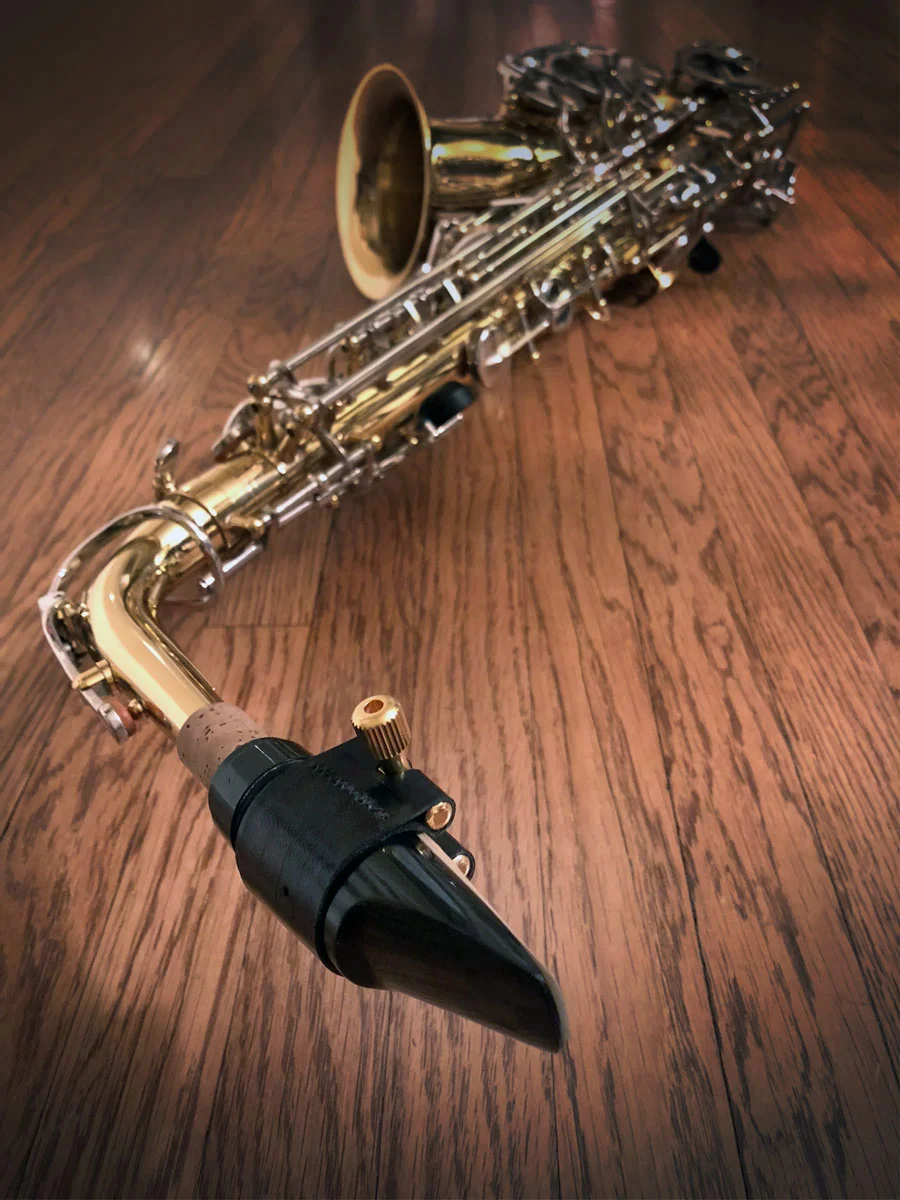
Instruments like saxophones and trumpets have detachable mouthpieces. These are the parts through which air is blown.

Played by themselves, the mouthpieces make funny squeaking or buzzing sounds. Attached to their instruments, however, clear tones are possible — sounds which are much grander and more versatile than the mouthpieces can make independently.

With their own particular designs mouthpieces produce distinct timbers. A single mouthpiece will not work for every player, and certainly not for every instrument.

* * *

Here's the thing. Each of us has a kind of instrumental mouthpiece of our own: our voice. It works in a particular way, and there are networks where it will resonate. There are venues and communities where our voice will take hold — where it will cause change to happen.

And at the same time, there are places where our voice is a poor fit. Same effort, same force of breath... but the result is mostly squeaking and buzzing.

Our challenge is not to figure out how a tuba mouthpiece can be forced onto an oboe. Our challenge is to make the right connections with the right instruments. To find instruments which will carry our message with clarity. To engage with the groups and platforms where our voices will resound.

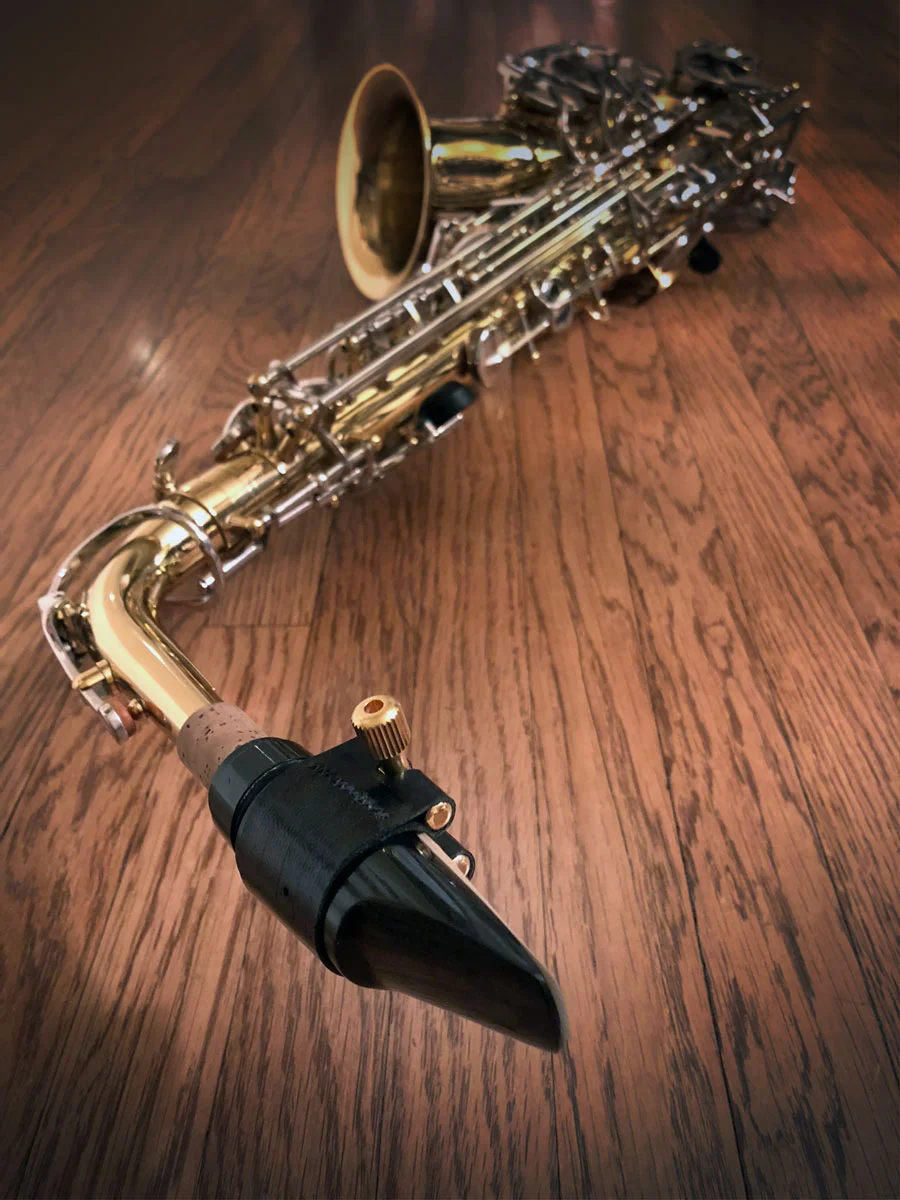
saxophone.jpg
stephen
This is he

I recently called the mobile phone of a new acquaintance. We had exchanged numbers and set a time in advance. As the call connected, I considered what I would say.

Growing up, I recall the firm protocol, "Hello. This is Stephen. May I please speak to so-and-so?"

And to take an incoming call, the proper reply would be, "This is he." Of course it would be.

But today's technology changes how we connect.

When I call someone's mobile phone, I know who will answer.

And they know it's me calling.

The old lines of dialog, while courteous, don't seem to make sense anymore.

Gratefully, while I pondered these ideas, my new friend answered the phone: "Hi there!"

It turns out, sometimes we don't need to overthink things. Sometimes, we just need to say, "Hi!"

The rest falls in place naturally.

stephen
Cup-filling
 
glass.jpg
 

If you're filling someone's drink, and you fill the vessel to the very brim, it might seem like you're being generous.

By one measure, you are offering as much as the cup can possibly hold.

Your output shows generosity.

But in practice, the person who gets the brimming cup also gets
the awkward task of carrying it.

The result is usually a wet hand, and a few puddles on the floor.

It's wasteful.

* * *

There's a practicality to generosity that shouldn't be overlooked.

Generosity is not always about how much the giver gives.

  • An overabundance of leftover party food that someone is pressured to take home

  • Bottled water sent to parts of the world where distribution is insurmountable

  • Winter coats donated just prior to the summer heat wave

  • A pile of cash offered to someone who has no idea how to manage it

  • A lecture about life lessons that drones on, and on, and on...

I'm not saying, "Don't be generous." Not at all.

Be generous. Be very generous.

But know the recipient. Begin with empathy. Understand what they need, and what they are capable of accepting. Then – by all means – give.

stephen
Attention

You probably wouldn't bring a letter opener and the daily postal delivery to your meeting.

You probably wouldn't sort junk mail.

You probably wouldn't take out stationary to write a letter.

You probably wouldn't open up a yearbook or photo album.

* * *

Yet during meetings, we see people reading email.

We see people scrolling social media feeds.

They sit down to check in, and then pull out their phones to check out.

Don’t forget: your attention is important to us. If it wasn’t, we wouldn’t have invited you.

stephen
Your imagination

We assume that some people have negative thoughts about our work – quiet thoughts that are never relayed to us.

But isn't it reasonable to assume that other people have positive thoughts about our work – other quiet thoughts that are never relayed to us?

Not all detractors will be vocal about it. They will quietly dismiss your work.

And not all supporters will be vocal about it. They will quietly love your work.

When you're imagining what people think, don't waste time on the detractors. Think instead about all the positive reviews that never make it to print. The praise that is never spoken. The affection that some of your fans keep in the quiet of their hearts.

The good stuff is out there, even if you don't always hear it.

stephen
First in line
left-turn_pexels-photo-332787.jpg

When you're at the front of the line in a left-hand turn lane, you have a job to do. When the arrow turns green, move. Turn with confidence. Operate the vehicle with a sense of dispatch.

You are setting the tone. You are the pace-maker. When you delay with your start – when you lag – everyone who follows lags too.

When you go first, when you speak first, when you respond first, you begin the story.

And if you stumble out of the gate (through carelessness or through unpreparedness) those who follow your lead have to work harder to set the right tone or to correct the pace. Their actions become a kind of response to how you've begun.

* * *

There are times when you will be first in line. First up. First to go. It may be through chance, through election, or through self-selection.

No matter how you got there, when it's your turn... mind the green light.

stephen
Difficult

"It's difficult to get all of that information."

"It's not difficult. You just need to click here, and then here, and then use this drop-down menu to select that, and then click there... Then you repeat that for each one. See? Easy."

* * *

Sometimes, when someone says something is difficult, what they really mean is that it's easy, but terribly inefficient.

That it's difficult because the inefficiency is difficult to tolerate.

stephen
Head nodding

Just because someone looks you in the eye and nods her head – it doesn't necessarily mean that she agrees with you. Just because a person doesn't voice opposition doesn't mean he supports what you're saying. You can tell yourself a different story, but you're not necessarily in the right just because you haven't been confronted.

When you're on the opposite side – and you are seeking someone's understanding or that person's honest perspective – be sure you ask your questions in the right way, with the right context, under the right socially atmospheric conditions. If you don't set the stage for honest discussion, all the head nodding you see might just be people being polite.

stephen
Atmospheric perspective
State College, Pennsylvania. September 6, 2018.

State College, Pennsylvania. September 6, 2018.

Atmospheric perspective is a way to create the illusion of depth in a painting. Generally, elements in the foreground have saturation and contrast, while elements in the distance are muted and lighter.

In nature, this can be seen when one looks toward the horizon – through an atmosphere full of particles and moisture – to see light-blue mountains or a hazy skyline. Off in the distance, things are less saturated. Foggy.

* * *

Our long-term goals can fall victim to perceived atmospheric perspective.

It's easier to focus on what's in front of our faces – what's visible in high contrast, saturated with color.

It's possible to forget that the things on the horizon are vibrant too. That our job is not to remain still – where things are clear and in focus – but to aim just beyond our vision.

To point, and to go with purpose... knowing that the atmosphere has a muting effect. That what we can see of our destination is not nearly as vivid as it will be when we get there.

stephen
Not for everyone
 
marmite.jpg
 

"It's not for everyone" is a comment that sometimes accompanies foods with a strong or unusual flavor. It can be said of an independent movie with a cult following. Or a certain style of music. Or a specialized activity.

Scotch whisky. Marmite. Bukowski. Mulholland Drive. Rothko. Philip Glass. Caving. Hot yoga.

These things are not for everyone. And it's a good thing they aren't. If they were for everyone, they'd be uninteresting. Unremarkable. Tepid.

* * *

As individuals, we often struggle with the desire to be liked. Not to be liked by some – but to be liked by everyone.

It's natural; I want you to like me.

And It's quite easy to allow this thought to extend to our work. Our creative endeavors. What we produce.

But we know that the best work – with few exceptions – is not loved by the masses. The best stuff is not for everyone.

It's the strong flavors. The work at the fringes. What exists outside of the mainstream. This is the work that's most tightly embraced by its followers. This is the work that creates change.

And this is the kind of work we desperately want to do. It's the work we need to do. The work that matters.

stephen
Look at me... or don't

"Look at me when I'm talking to you."

You might hear a frustrated parent saying this to a child.

Of course, we know that looking isn't always an indicator of actual listening.

Looking can help to curtail distraction, but it's not a sure thing. I've often stared at someone's mouth moving while my mind wanders far from what they're saying.

I wonder if we might offer a different invitation from time to time: "Close your eyes and really listen to what I'm saying."

Forget the visual. Don't worry about eye contact. Focus on the words. Hear them. Listen.

stephen
A shower in Bath
 
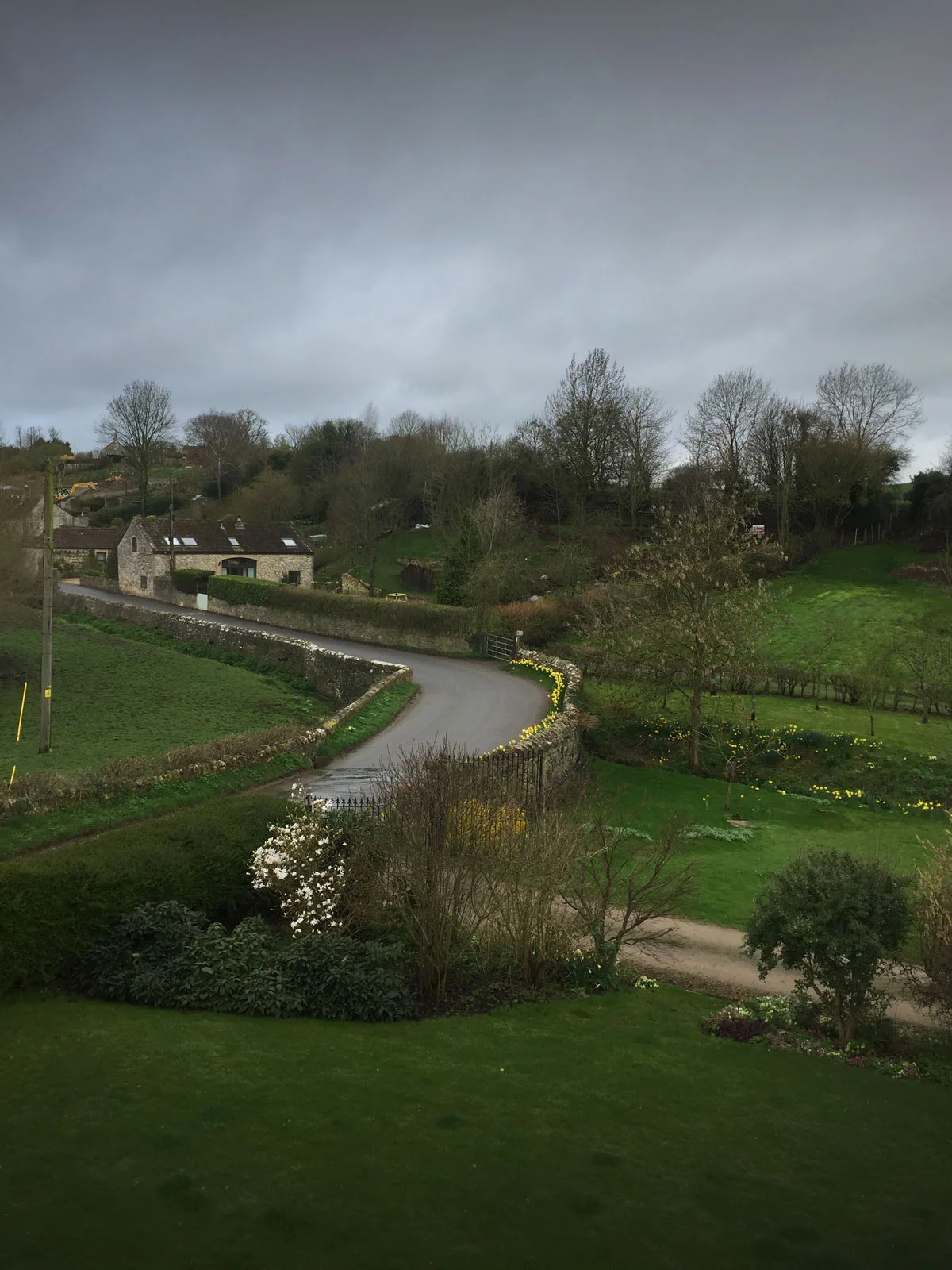
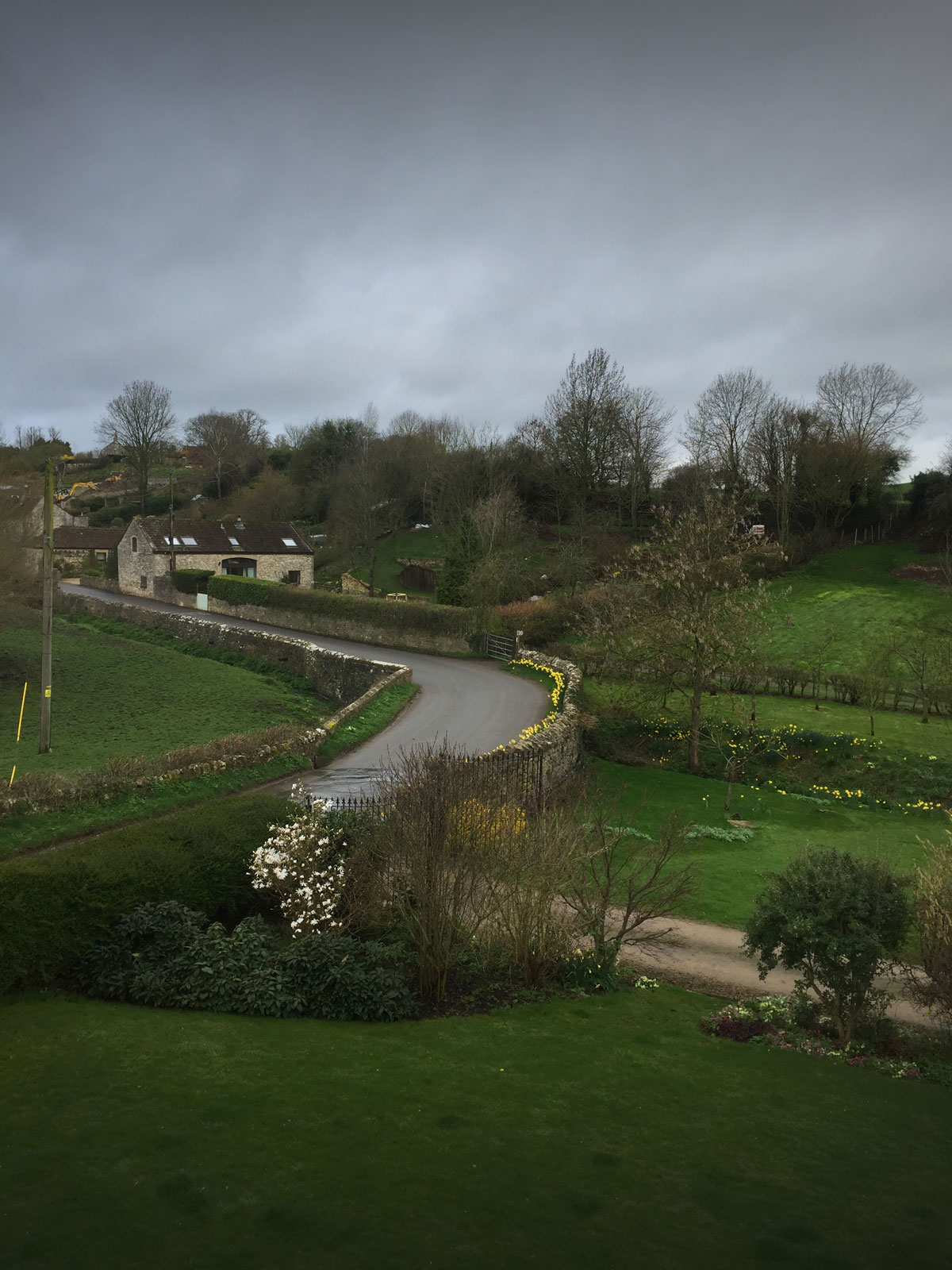
priston_bath.jpg


I was once in Priston, a village just outside of Bath (Somerset, England). It's a beautiful part of the world, rich with history. The countryside is lush, and the single-lane roads are lined by hedgerows.

One evening, my hosts suggested that we have a drink at the local pub. It was a ten-minute walk from the house, so we set off.

On average, Priston sees precipitation one out of every three days. Here's what I learned: the locals aren't bothered by it. They like it. They embrace it.

As we walked to the pub that evening, a constant drizzle saturated me. One of my hosts remarked, "I just love the feeling of a light rain on my face. Isn't it extraordinary?"

She was delighted.

Back home, the rain might have made me grumble. Surely, I'd have taken an umbrella. But here, in Priston, we walk to the pub to meet friends. If it rains a little, we get wet. We'll dry off by the warmth of the hearth.

* * *

Light rain. Moderate traffic. Slow service.

If we want to focus on these things as undesirable – if we want them to be an irritation that contextualizes our day – we can. But what is the cost?

Isn't it better to focus on the positive when we're faced with situations outside of our control?

  • It's raining, and I'm on my way to see friends at the pub.
  • I'm delayed by traffic, and I can listen to the rest of my podcast.
  • The service is slow, and I can take a few moments to let my mind slow down and ruminate.

Be annoyed if you want. But by doing so, you're missing the good stuff.

stephen
Visual cue blindness

Blindness to visual cues can be cured. Pay attention to your audience as you speak. Read them. Are they looking at their watches? Are they scrolling on devices? Sorting their inbox? Packing up to leave?

They're not listening to you. Either something else is more important to them, or you've lost their interest. Their distraction may even be innocent. Unintentional. But don't continue. Choose to re-engage them, or let them go. 

stephen
Your type of customer

If I walk into your store, and you think, "you are not the type of customer I'd like to have," then you can either say that, or you can...

  • ignore me
  • make it obvious that I'm bothering you
  • be impatient with my questions
  • acknowledge me, and then help the person who walked in after me
  • speak condescendingly

But if you'd like to have my business, you can interact with me as though this moment is the sought-after opportunity for you to sell your wares or services. Because that's what it is, isn't it?

When you want a customer – that is, a person who makes it her custom to do business with you – then you need to cultivate that relationship.

It starts by saying, "Hello! How can I help you?" ...and meaning it.

* * *

How could I not reference this movie?

Still from the shopping scene in Pretty Woman. Dir. Garry Marshall. Touchstone Pictures, 1990.

Still from the shopping scene in Pretty Woman. Dir. Garry Marshall. Touchstone Pictures, 1990.

stephen
Learn from little league
little_league.jpg

Little league baseball fielders are encouraged to do it right. When you're on the field, hustle. When you're in position, be ready. When the ball comes your way, get it.

When the ball isn't coming to you, do something helpful. Watch the ball. Watch the play. Back someone up. Be prepared. Pay attention.

What would happen if we had these same attitudes at the office? In our families? In our communities?

stephen
Being friendly

In this culture, it seems like strangers don't say hello all that often. What's more common is for two people to cross paths without speaking. I'm not talking about bustling cities and campuses; I'm talking about two strangers passing on a sidewalk in broad daylight or in a well-lit hallway during lunch.

* * *

When I'm outside, and someone walks past my house, I choose to say, "Hello." I say it in a friendly way, with a smile.

There was a time when I would wait to see if someone would greet me first in these situations. If they didn't, I'd wonder if they were shy or unfriendly, or if they felt unsafe for some reason.

But I've realized this: this is my house. This is my little corner of the world. I set the tone, and I can choose to make this a friendly part of the neighborhood. I get that choice.

So... I offer a bright, "hello" and I smile warmly. That's what we do here.

stephen
Dim the lights

Have you ever noticed how people instantly become more beautiful when the lights are dimmed? (this is written with tongue in cheek)

We can easily become fixated on flaws, blemishes, and imperfections. In appearances. In personalities. In our homes. In our careers.

What if we could dim the lights on those things? Not forever, but long enough for us to recognize beauty. To recognize worth. To look beyond the surface and to embrace the bigger, better picture — the glowing, illuminated picture. It's worth a try. Besides, you can always turn the lights back up.

stephen
Excuses

Sometimes it's easier to have a good excuse than it is to do the work. But instead of using your energy to generate a sympathetic story, use that energy to do the hard work of accomplishing the task at hand. An elaborate excuse might be more interesting to relay, but it's the work that needs doing.

stephen
Outside the numbers

When we measure, we can assess and improve. When we know the numbers – when we track them – we can work to move them in the direction we desire. Win-loss percentages. Readmission rates. Recidivism. We measure, then we change.

But this way of thinking – while it has it's benefits – also has trade-offs. It's possible for us to be so focused on the numbers that we forget about the important things that often go unmeasured.

  • Compassion
  • Friendliness
  • Knowing someone's name
  • Holding the door
  • Courtesy
  • Humility
  • Empathy

While you're working to make the numbers look good, don't forget about all the important things that never make it onto the usual charts and graphs. Sometimes, they're what matter the most.

stephen