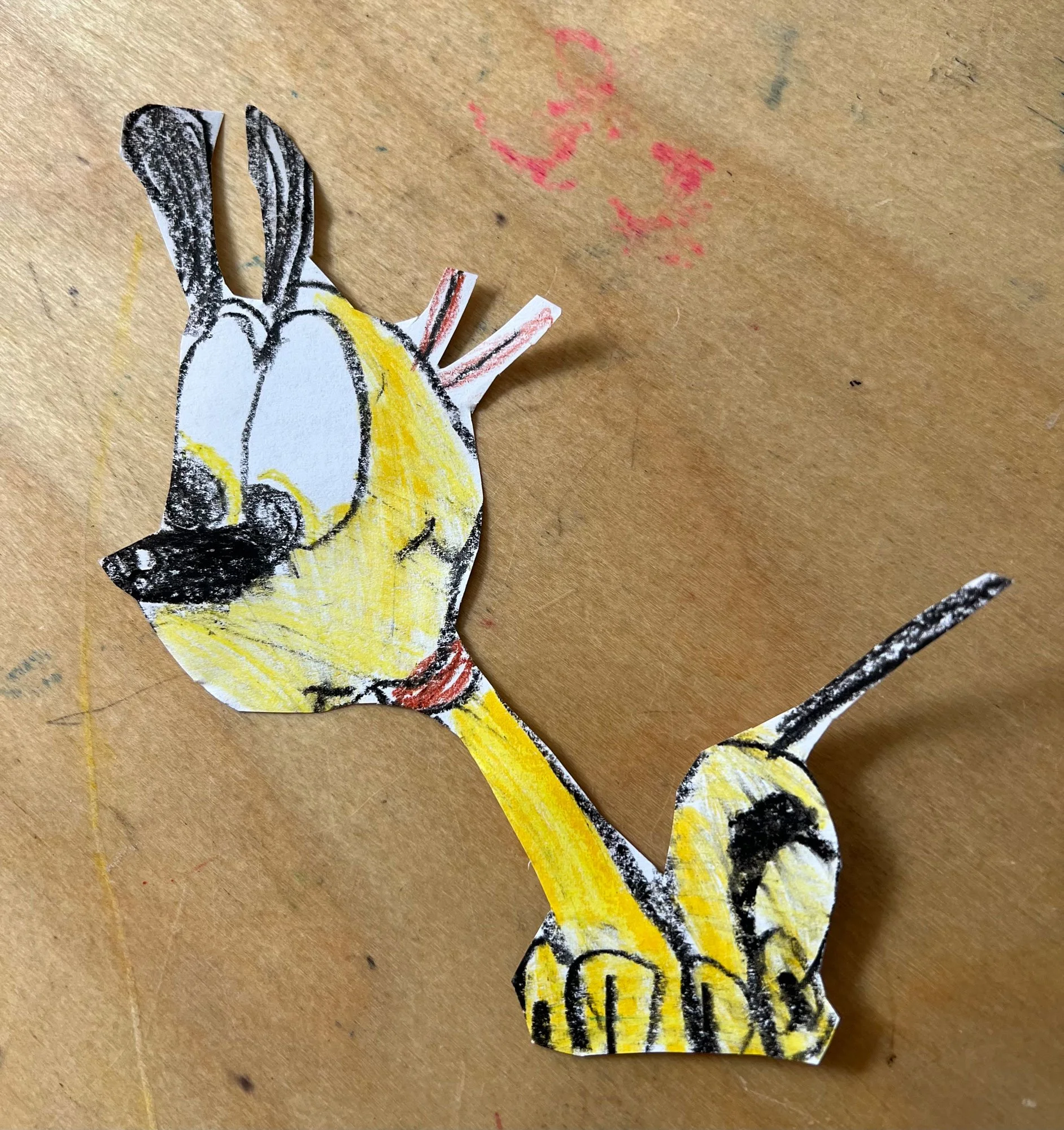
A good day

What makes a good day for you? What criteria are you measuring? How much of it is within your control?

If your good day is based on the weather, people’s opinions, and good fortune … you’re setting a high bar for success. There are a lot of variables in that mix.

The alternative is choosing to measure things within your control. Things like, “How well did I respond?” and, “Did I keep my promises?”

Love a sunny day, but don’t rely on sunshine to make it a good one.

stephen
“Always wanted to do”

Is there something you’ve always wanted to do?

Have you even used that language? i.e. “That’s something I’ve always wanted to do.”

Is that thing — is it an impossible dream that’s only worth occasional musing, but literally not possible?

Or is it something you can do, but you just haven’t done it?

If it’s possible, and you truly want to do it, what can you do to make it happen?

What small step can you take that will bring you closer to making that dream become a reality?

Note: “waiting until the right time” is not a particularly effective strategy. “Waiting” cannot be the small step. A small step requires action.

stephen
Good and better

“This is good … and I can still do better.”

It’s a complicated dance.

Because the extremes — “This is terrible; everything is bad” or “I’m perfect; there’s no room for improvement” — neither one is a healthy place to live.

The sweet spot is somewhere in the middle.

stephen
Getting hurt

“Don’t worry. It’s not going to hurt you.
Well … if it does, it won’t hurt badly.
And if it does hurt badly, it won’t hurt forever.”

In discussing the possibility that a rolling baseball might pop up and hit my son, I found myself incrementally adjusting how I communicated what to expect. Many worthwhile pursuits in life — sports included — involve a nonzero chance of getting hurt.

All this in the spirit of teaching: “No matter what happens, you’re going to be OK.”

stephen
Who are you?

It was surprisingly profound for the cashier to ask me, “Who are you today?”

Who am I? At this moment??? How to answer?

After a beat, and risking a disconnected reply, I said, “Fine thanks. And how are you?”

She was fine. And she had indeed asked me how I was today, not who I was. I had just heard it differently.

But the question remains. For all of us.

Who are you today? What does it mean to be you? In the all-too-short period of time that you’re on this planet, in this moment, who are you? How are things slightly more remarkable because you exist?

stephen
Cut some corners

In the mid-1800s, if you spoke of “cutting corners” you might be talking about hunting — how a rider and hound chase a lure. (Chasing directly behind was preferred over cutting corners.)

But these days, “cutting corners” tends to mean that someone has done hasty work. That quality has been sacrificed. That steps have been skipped.

However … with each advance in technology, tools, and platforms, it’s worth reevaluating whether the corners are still relevant. Some corners might be old habits that no longer make sense. They might be part of an outdated map. The old corners might not even exist — you might now be in an open field.

The advice is not to be deceitfully slapdash. Rather, it’s to stay alert to innovation. Don’t keep your corners if the corners no longer matter.

stephen
Whose job?

Three people were at the hospital reception desk. Two were seated behind monitors. The third person, a security guard, stood nearby.

All three were cheery. All three were nice. But it was the security guard who smiled broadly and gave me clear directions on which hallways to take, when to turn, and what to do. As though an administrator had said, “Part of your job is to be like a welcoming doorman. When visitors arrive, treat them like honored guests. Be friendly and helpful. Make sure you smile warmly.”

I’m willing to bet that no one ever gave him such instructions. My guess is that he made a personal choice to take on that role. “Whose job is it to welcome people and offer guidance? Whose job is it to be warm and inviting? I can do those things.”

A certain kind of magic happens when we use our gifts to fill unwritten roles in order to make things better.

Webmaster
Best and worst

“They’re the best losing team in the league.”

Sometimes a team has skill, determination, and drive. But the little things fall apart. Or details are missed. Or the timing is wrong. Or a little bad luck comes into play.

Despite a lot of promise, sometimes good teams come up short. In sport, in business, in politics.

But if a team is really a good team, those losses fuel their drive to improve. The voids created by setbacks aren’t filled with despair — they’re filled in with grit, character, and boundless determination.

stephen
Saying and doing

“Easier said than done.”

There are many times when this is true. Other times, curiously, it’s the opposite.

But still, sometimes we say things in order to give ourselves the courage to do them. The words become our way of leaning into the action.

stephen
Stuff

I was at a restaurant with my family a couple years ago. After I ordered, my then five-year-old son asked me with astonishment, “Why do you want so many stuff?”

It was a funny occasion. But every so often, I give that question serious thought. Our hunger for food, material goods, money, attention, influence … it can lose its grounding if we’re not careful.

When that happens, it might be good to ask ourselves, “Why do I want so many stuff?” — and to use that moment to better embrace a sense of contentment and sufficiency.

stephen
Phone habit

After hearing about Catherine Price’s writing on how to “break up” with your phone, I’ve changed my lock screen.

It now has an image with three questions:

What for?
Why now?
What else?

* * *

What for? Why am I about to use my phone? What am I about to check? What’s the purpose? What need am I trying to satisfy?

Why now? What about my present situation is prompting me to use my phone? Am I bored? Am I anxious? Am I avoiding human interaction?

What else? Instead of looking at my phone, what else could I be doing? How else could I satisfy my present needs?

* * *

I still use my phone plenty. But these questions offer a welcome interruption to an unconscious habit. They give me just enough pause to check-in with myself before I thoughtlessly dive into whatever is behind that screen. This hesitation is sometimes all it takes for the impulse to pass.

You might not have a problem with your phone. But maybe there are other habits you’re trying to keep in check. An afternoon drink. A late-night snack. Unnecessary shopping.

These questions can help interrupt habits like those, too.



H/T Greg

stephen
Incomplete

The internet is incomplete.

Despite its infinite coffers, we can’t find every answer using that tidy, rectangular search bar.

Some things just aren’t there.

They’re bound in books that have never been digitized. They’re captured in tightly wound VHS tapes. They’re in the garden or tucked in the corners of our memories.

They’re even yet to be discovered, let alone captured.

And that incompleteness is part of the reason we gather. Part of the reason we share stories. Part of the reason we walk, and ponder, and muse, and reminisce.

The internet contains worlds within worlds — but what matters most is often right in front of us … not through a search bar behind a screen.

stephen
Others’ dreams

Yesterday, I referenced a quote about building someone else’s dreams. One thoughtful reader prompted further reflection.

One thing I didn’t mention is this: there’s nothing wrong with making a decision to help build someone else’s dreams. In fact, that’s often what we do. And it can be a beautiful thing — particularly when we believe in what’s being built.

And in those cases, the dreams of others become entangled with our own. Their dreams become our dreams.

Here’s to dreaming more — together.

H/T Callan

stephen
Building our own dreams

Entrepreneur Farrah Gray says, “Build your own dreams, or someone else will hire you to build theirs.”

This is true.

And the idea can be extended to how we live our days. To what we give our time and attention.

If we’re not guarding and guiding our minds — if we’re not leaning on choice, intention, and reason — the world will be happy to use us for its own purposes, like an unconscious zeitgeist collaborator.

* * *

Don’t let the winds of culture blow you around willy nilly. Don’t be passively sucked into click-bait, endless scrolls, and the 24/7 news cycle.

Set a sail of your own and chart the journey you want to live. Build your own dreams.

stephen
Starting later

It might be too late to become a master in a certain practice … but it’s never too late to start learning new skills.

Don’t forgo a beautiful journey just because you’ve chosen an unconventional starting point. Remember: some of the day’s most beautiful moments happen after the sun begins to set.

stephen
Winning graciously

From Jon Batiste’s acceptance speech for winning Album of the Year for “We Are” at the 2022 Grammys:

“I believe this to my core: there is no best musician, best artist, best dancer, best actor. The creative arts are subjective, and they reach people at a point in their lives when they need it most. It’s like a song or an album is made … and it almost has a radar to find the person when they need it the most.”

Jon is a beautiful soul who teaches us so much about creativity, joy, humility, and gratitude. He talks about thanking God and putting his head down to work on the craft every day.

Let’s do more of that.

stephen
Say it poorly

Don’t actually aim to say it poorly. But risk it.

Too often, when we don’t know what to say, we choose to say nothing. And there are times when saying nothing is fine. That is, it hurts no one. It’s inconsequential.

But in difficult situations — when we think we should say something but we don’t quite know how to say it — it’s good to try. The words might not be perfect. They may need to be clarified. But that you’ve tried to put words to feelings … that matters. To the listener and to the speaker.

stephen
Passing the test

Last week, I shared some personal struggles with a trusted advisor.

Part of his helpful reply was this bit of gold: “Well, you’re passing the ‘human’ test.”

It can be deeply comforting to be reminded: “These things you’re feeling? These challenges you’re facing? It’s all totally normal. This is part of life.”

That we face difficulties means we’re living. It’s part of the deal. Lean into it. Solve problems, seek beauty, and don’t lose heart.

You’re passing the human test.

stephen
Declining for good

I love that my seven-year-old son asks me to draw things. Sometimes he will ask me to draw something from his imagination. Sometimes he will ask me to copy a comic from the newspaper. It’s fun to take on these challenges.

But sometimes, I say, “No.” On occasion, I’ll say, “No, buddy. You can draw that. I know you can do it.”

And after some consideration (and gentle fatherly urging) he ends up giving it a try.

More often than not, he’s really proud of what he comes up with.

I still like to draw for him, but it’s even better when he draws for himself. And better still when we make time to draw together.

* * *

There are times when the generous thing to do is to help not by doing, but by encouraging.

* * *


stephen
Comfortable seat

Unfair situations are a lot more bearable when we’re on the upside.

Inequality is a polite, academic discussion when we benefit from the imbalance.

Injustice is a distressing but tolerable feeling when we read about it instead of experiencing it directly.

* * *

Recognizing our own comfortable seat on a broken ride — whether personal, familial, local or global — is the first step in standing up to help fix it.

stephen