Moving from how to what

We often begin by learning how. How to speak, how to write, how to play.

These are skills that can be developed.

At some point — maybe sooner, maybe later — we shift our focus away from how and toward what.

Now that we know how to speak, what will we say?

Now that we know how to write, what will we compose?

Now that we know how to play, what songs does the world need to hear?

If we don’t move beyond “how” then we remain as pupils.

And while we’re lifelong learners, the goal is not to merely collect skills. The goal is to use those skills to do meaningful work.
stephen
Self-assessing

During a moment when I feared that I had made a mistake — one that would have unintentionally slighted a hero of mine — a friend offered me kind, timely advice.

“Breathe. It’s probably much worse in your imagination. Go easy on yourself.”

And importantly: “Give yourself grace.”

I typed that last part into my personal notes. But my fingers duped me, typing “grade” instead of grace.

It prompted me to think of how often we judge ourselves — and harshly too — giving ourselves average or failing grades rather than viewing ourselves with love and self-compassion.

Don’t begin with grades.

Begin with grace.

stephen
Lascaux

Present-day Lascaux, France. Some 19,000 years ago, maybe longer — What must it have felt like to make marks on the cave walls for the first time?

Had anyone done this before? What was it for? Who was it for? Would it even work?

Given millennia of perspective, can we be so bold? Are we willing to chart new paths? To try new things? To make our own marks?

We have countless opportunities to create beauty and connection in the work we do.

The walls of our own caves await.

stephen
Making mistakes

When we make mistakes, most of the time it’s not because we’re operating blindly.

I rarely make mistakes when I’m sleeping (save for the time I dozed off on the subway and woke up at Coney Island).

No, it’s not because our eyes are closed.

Rather, our eyes are open but focused elsewhere. We’re watching what’s in front of us but we should be paying attention to what’s beside us. Or the other way around. Or our head is down in the details when it should be looking at the big picture. Or the other way around.

The problem isn’t that we’re people who don’t pay attention. The problem is that at times, we’re just paying attention to the wrong things.

stephen
Morning waves

I drive a two-mile circuit to get my children to their respective schools. On a typical morning, I’ll exchange smiles and waves with about eight people — a mix of other parents driving cars, school employees, and pedestrians.

Most of these people I know by name — and they know me — but some I only know because we regularly wave in passing.

I’m grateful for these small, friendly interactions. They cost nothing and require minimal effort — yet I’m convinced they have a positive impact … even if just for a short while.

But secretly, I think they have a greater, lasting effect.

We create the culture, little by little, by what we do each day.

stephen
Technically

“Technically, we treated you fairly.”

It’s no wonder this phrase doesn’t feel very good.

If you’re going to treat someone fairly, it’s best to do it from the start — woven together with solid communication and aligned expectations.

We can quantify fairness in numbers, but a big part of it has to do with perception. It’s a feeling. It’s a story people tell themselves.

If you have to show someone the data to convince them they’ve been treated fairly, you’re already behind the ball.

stephen
New orchards

If you’ve prepared the land and planted a young orchard, what’s its value?

You have a plan. You have a vision for growth. A dream in the making.

But the world will often judge you only by the fruit it sees.

Those seeking short-term gains and immediate results will have little patience for your field whose first harvest is years away.

Don’t be deterred. The world sees today. You see tomorrow.

stephen
Time

Time is always the same. Never faster. Never slower.

We know this, and yet … we still attempt to manage it.

Sooner or later we learn that we cannot manage time. We can only manage ourselves.

stephen
Squeaky wheel

The squeaky wheel gets the grease. But some of our wheels don’t squeak, regardless of what they need.

Some areas in our life are silently desperate for attention. No squeak to give, yet still in need.

Whether it’s physical, financial, mental, relational, vocational, spiritual … we’re better when we attend to those areas before they sound the alarm. In many cases, their subtle signals for help are lost in the everyday noise.

It’s up to us to listen better.

stephen
Thoughts and beliefs

Don’t believe everything you think.

Our minds are loosely controlled message boards. Thoughts are entering and leaving all the time.

Just because a thought is there doesn’t mean it’s necessarily useful, healthy, or even true.

stephen
Last resort

These are tough times. But the world has never been free of tough times.

New challenges for us, perhaps, but just another blink of the world’s eye.

* * *

History tells grim tales which begin, “We have resorted to …”

If we ourselves are “resorting”, it may be time for us to begin re-framing.

When we resort, we fall back on well-known, undesirable measures.

When we re-frame, we expand the map. We draw new boundaries. We play a new game. We embrace possibility. We discover better ways.

stephen
Running wild

“You can’t just let nature run wild.” — Former Alaska Governor Walter J. Hickel

* * *

What does it mean for you to run wild? Not to be reckless and out of control. Rather, what does it mean for you to be free? Unconstrained?

We can give that gift to ourselves. In our daily practices. In the work we do. In moments we create.

Nature wants to run wild, and for nature, it’s what’s best.

At times, and in certain ways, it can be good for us too.

stephen
Being creative

If you say, “I’m not creative,” it’s time to stop.

“I’m not creative” is something someone taught you to say.

They were wrong.

If you have ideas, you’re creative. (You do have ideas.)

Creativity doesn’t have to do with your ability to draw, compose music, design logos, or make the furniture look nice. Those are all skills and they can be learned. Yes, there are some people who seem to have creative intuition, but most of us have been taught along the way.

Your creative tools might not be paint or clay. They might be data. They might be spreadsheets. They might be ideas. They might be questions.

All this is to say: you are creative. Invite that knowledge into your heart as the truth that it is.

You. Are. Creative.

stephen
We’re living it now

We don’t get a second draft.

We can’t go back and edit.

Moment to moment, life is happening now.

This isn’t the practice run. This is it. The real deal.

Stop clearing your throat. Stop stalling. We need you to make your mark now, and you’re the only one who can make it.

stephen
Leftovers

Leftovers eventually spoil. At that point, they can only be discarded.

But at the start — when the leftovers go into the refrigerator — they have a lot of promise. A delicious dish is somewhere in the future.

Sometimes that comes to pass. And sometimes we forget about the stored food, missing our window of opportunity.

In life, we have leftovers, too. Abandoned projects. Shelved endeavors. Hobbies that — if we’re honest with ourselves — we will never revisit.

Some of those things have a beautifully long shelf life. But others … they’re just taking up space. Physical space. Mental space. Emotional space.

It’s OK to move on. They’re not failures. They’re not things to regret. They’re just leftovers that we never got back to eating.

When it makes sense, give yourself a little grace and let go of what needs to be let go.

stephen
Quick fixes

Our culture is filled with quick fixes. Easy steps. Simple tricks.

What if we chose another path?

What if we chose the long way? The hard steps? The journey that is immensely challenging but absolutely worthwhile?

It could be the difference between leading an ordinary life and one that is remarkable.

stephen
Slowing down

Every once in a while, we need to slow down.

Sometimes we’re lucky enough to get a sign.

Mine came this morning as I hurriedly poured a second cup of coffee. Except that I wasn’t holding the carafe; I was holding a box of cereal.

Sometimes little slip-ups give us a clue that we need to stop rushing and to pay closer attention.

For me, cereal mixed with a sip of coffee prompted me to pause, to check in with myself, and to say, “Slow down.”

I said it aloud for good measure.

stephen
Bowing

We give thanks for the applause. We give a bow. And another. And yet another.

But at some point, we recognize: the people we seek to serve don’t want more bows — they want an encore.

Give them one.

stephen
Even though

We are grateful.

Even though we have suffered loss.

Even though we are apart.

Even though things are not as we had planned.

Even though some dreams are yet to be.

We are still grateful.

Amidst all the struggle and disappointment, we remain filled with gratitude.

There are always “even though” conditions; we are imperfect people living in an imperfect world.

But our reasons for thanksgiving are too many to number.

stephen
What you leave behind

What are you leaving behind? Is it a gift? Is it generous?

I can hear the previous homeowner’s thoughts, “We’ll just leave these here, stacked in the cellar. Maybe someone could use them one day.”

My response — ten years too late — is, “Please don’t.”

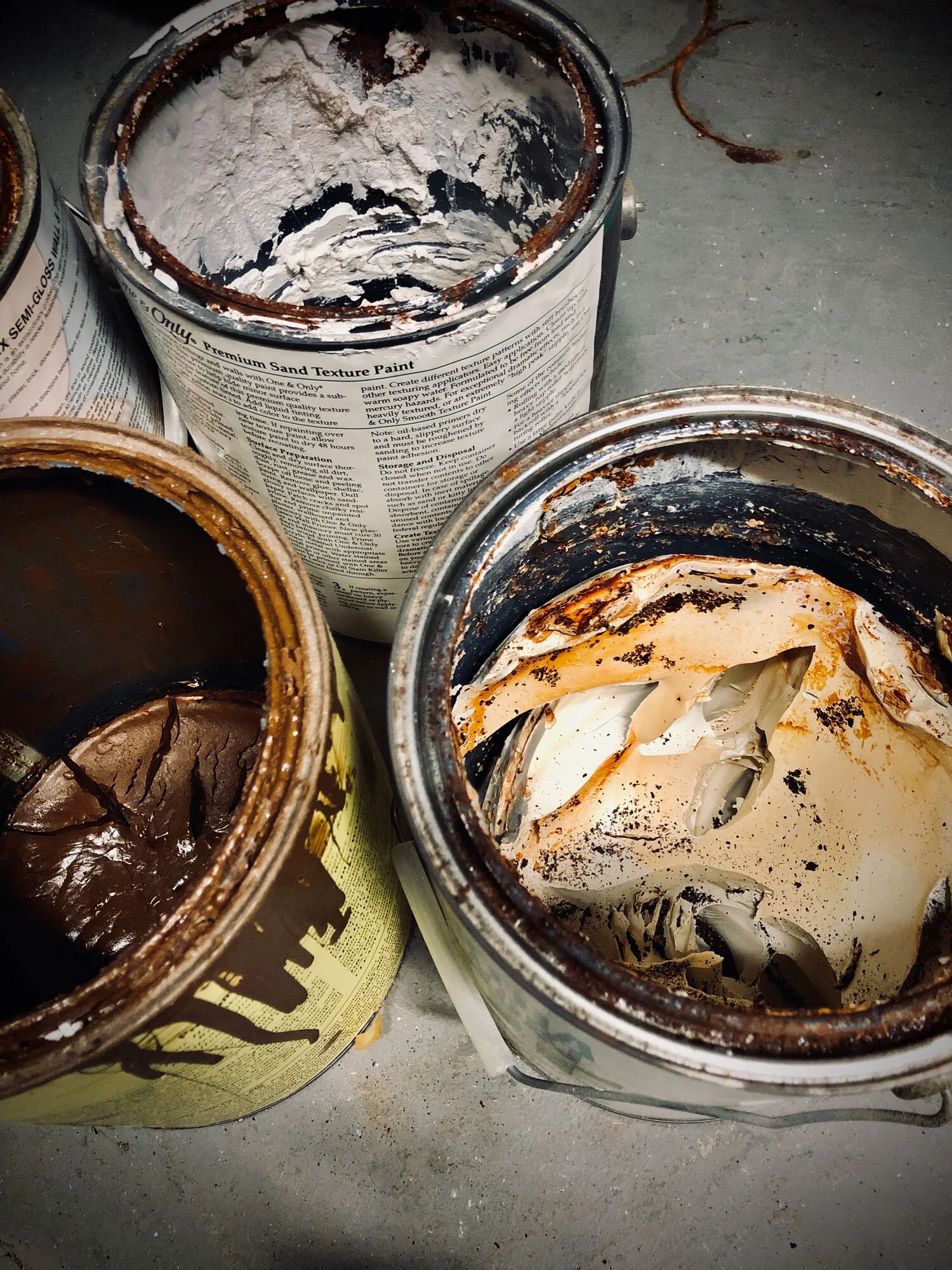
Disposing of thirty cans of leftover paint has given me time to think about this. A few full. Most not. Some covered with rust. Some holding dried cakes of latex. Many with liquidy goo.

None of them useful.

So back to the original question: Could someone actually use what I’m leaving behind? Is it generous? Or am I just being a little lazy?

* * *

Practically speaking: when selling a home, the thoughtful thing to do is to leave a list of paint manufacturers and colors, along with a note saying, “If you like any of these colors, here’s where you can get more.”

That’s a gift I’d take. I might not use it, but I’d appreciate the gesture.

 
(This is a tenth of the gift I received instead. Beautiful in its own way, actually.)

(This is a tenth of the gift I received instead. Beautiful in its own way, actually.)

 
stephen