
Satisfaction is not found at the bottom of the feed.
Wisdom isn’t acquired by scrolling further down.
Peace is not discovered by tapping and clicking.
And yet, by the intensity with which we stare at screens, one might think otherwise.
Satisfaction is not found at the bottom of the feed.
Wisdom isn’t acquired by scrolling further down.
Peace is not discovered by tapping and clicking.
And yet, by the intensity with which we stare at screens, one might think otherwise.
We can be wise, but we can also be forgetful.
More often than we’d like to admit, we’ve failed to take our own good advice.
More often than we’d like to admit, we’ve stumbled over the same minor obstacles.
With a humble heart, however, we can look back to lessons we’ve learned and times that we’ve offered sound counsel.
And we can learn once again, and we can listen to ourselves.
A crisis affects many things, but it doesn’t necessarily affect every-thing.
How does one read a book during a crisis? Or eat? Or tend to a chore? Or breathe deeply?
The answer might be: in the same way as usual.
Despite a shaken world or a shaken mindset ... some things of life can be insulated. Some things can remain remarkably (even eerily) unchanged.
Just because there’s a crisis ... doesn’t mean that “crisis mode” applies to every activity or every situation. It can’t.
And maybe — just maybe — that’s a good thing.
We live in a world of ratings and reviews. One star. Five star. A-plus. Triple-C. Don’t-waste-your-time. Delicious.
Some ratings can — and should — hold weight. Crash tests and medical trial results come to mind.
But lots of ratings are based on taste and opinion.
It’s why any given book, movie, or series ... has its super-fans as well as its haters. What one person loves, another can’t stand.
So what does this mean?
It means that it’s OK to put faith in our own taste. To love what we love, to not treat every 5/5 rating as gospel, and to remember every review is written from a particular author’s perspective.
And that reviewer might not want what you want or appreciate what you appreciate.
Love what you love.
As humans, we do all sorts of things — both grand and subtle — to seek the answer, without asking the question:
“Do you love me?”
The beautiful thing is, we do all sorts of things — both grand and subtle — to express to others, without using words:
“Yes, I love you.”
Monday. Start of a new week. Time for setting goals and making plans.
But what if this week isn’t about how much we can accomplish?
What if it’s about how much passion we can bring to the things that we do?
Said another way: not how much ... but how much care.
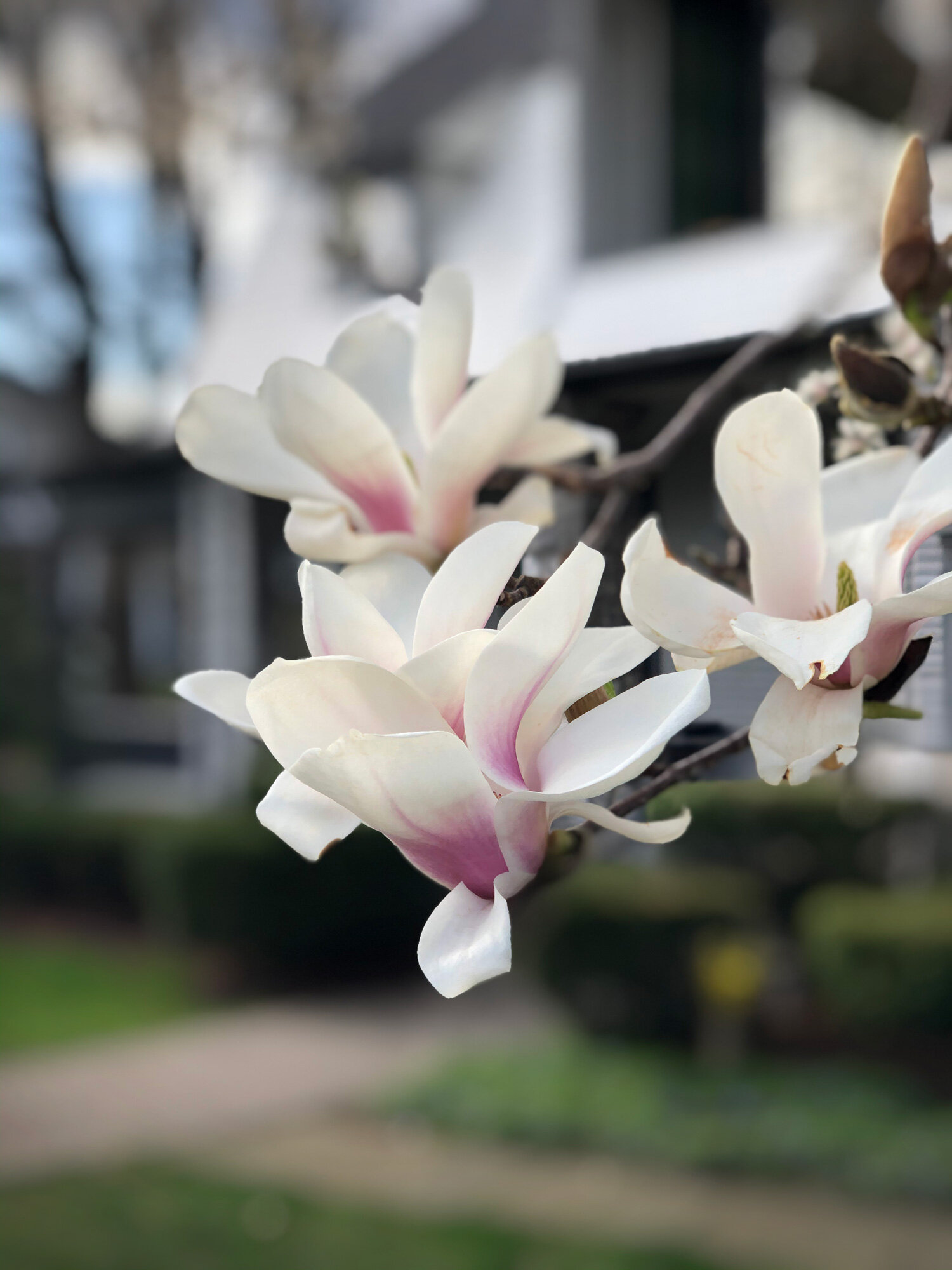
Spring is a time of rebirth. What’s dead begins to come alive. What’s gray soon bursts with color.
Perhaps it’s a good opportunity for us to look inward. Have we let any intentions become dormant? Have we allowed worthy dreams to wither?
As nature rebounds, it may be time for us to rebound as well. To bring new life to flames that have gone dim.
True, some dreams are meant to die. But others ... others are waiting to blossom — waiting for us to clear aside fear, doubt, resistance, or laziness.
As the earth comes alive once more, may the best of our hopes and dreams do the same.
Since the outbreak began, I’ve read a lot of emails related to pandemic response and contingency plans. Some organizations are demonstrating inspiring resilience and remarkable inventiveness.
Others are understandably struggling. Some people are feeling under attack and underappreciated; I can tell by the way their emails are written. Here are some lines that I imagine they’d like to have included — statements that didn’t make the final cut before pressing send:
Your expectations of us are unreasonable.
You don’t know how hard this is.
I don’t want to deal with this problem.
I liked the system we had before.
I don’t want to learn new ways of doing things.
I’m dealing with my own problems too.
Stop comparing us to others.
We’re doing what we think is best.
Stop judging us so critically.
Two emails go out. One demonstrates leadership amidst challenge. The other is defensive. Maybe a little passive-aggressive. The thing is, it’s quite possible that both authors received the same number of complaints. They both have an inbox mixed with generous praise and harsh criticism. Their internal monologues may even be similar.
They’ve just chosen to respond in different ways.
Now, more than ever … it’s an important time to ask:
How can I be a contribution?
What can I do that will serve others?
Am I seeking to do meaningful work?
It is not the moment to ask, “What can I do to fill time?”
It’s the season to dig deep, and to see what we’re really made of.
It’s simple: begin from where you are.
Sometimes we get this idea of where we want to be — our destination — and we think about an ideal starting point.
If I began from a different place, it would be easier to get to where I want to go.
Maybe. But you’re not starting from that different place. You’re starting from where you are.
Your intended path might need to pass through another starting gate, but the first step always begins from where you are right now.
Technology enables everyone to produce polished work. With little or no training, we can create shiny things. This means that on the surface, we can all look a lot like experts.
Two things worthy of consideration:
One, the minimum level of expected quality continues to ratchet upwards. Work that previously could have only been done by a production company can now be done from a kitchen table. There’s little excuse for clumsy work when beautiful templates and example programs are at our fingertips.
And two, surface quality does not guarantee actual quality. A slick chart does not necessarily show accurate data. A gorgeous video does not necessarily deliver sound advice. An engaging website does not necessarily have its foundation in facts.
* * *
Polish is independent of expertise; it’s unwise to use polish as the lone metric for evaluating worth.
One day, the pandemic will end. It might not be for a long time, but it will happen.
Where will we be when that shadow is lifted? What will we have done between now and then?
What can we do to not lose sight of the long view while the news of today pushes into every corner of our lives?
* * *
We can’t close our eyes and wait for this to end. The time to be and the time to act is now. Eyes open.
We may shelter in place, but we can shine from where we shelter.
And the others ... those brave souls at the fore who have not a minute to spare to read these lines ... we can shine in gratitude for their sacrifice and for their heroism.
And we can keep the long view in sight.
Even during wars. Even during long-term illness. Even during separation, diaspora, and pandemic.
We still have birthdays. We still pass milestones. We still celebrate ... albeit in different and perhaps unconventional ways.
It’s because throughout the struggle — and there is always struggle — we’re humans rooted in love and connection. In good times and bad, that foundation remains.
Even in darkness, we’re reminded that there’s an enduring light.
Between today and tomorrow, you might receive five emails. Or fifty. Or a hundred.
The total number isn’t significant.
What’s important is this: how many of those emails are relevant? How many are truly important? How many require action on your part?
Seeing a large number of unread messages can cause immediate stress.
But often, there’s a lot of noise mixed in with the few things that are consequential.
And that tends to be true for a lot of things in life.
The challenge is not letting the noise run the show.
Consider your expression when you’re surprised or astonished.
That period of wide-eyed, gaping-mouth shock lasts but a moment. It’s not permanent.
May that physical experience remind us that intellectually and emotionally, we can’t let the unsettling nature of surprise last forever.
Sometimes we’re caught off guard, but at some point — maybe sooner, maybe later — we have to move beyond the surprise and we have to decide what to do next.
How many problems exist because we avoid uncomfortable conversations?
Or because we don’t like feeling uncomfortable in general?
Discomfort is often a signal for what needs our attention.
Attend to it.
We count the sick.
We count the recovered.
We count the dead.
We count the days.
But let us also count the blessings. And the laughs. The calls, the notes, the friends, the smiles ... every meal, every breath, every heartbeat, every moment.
So long as we’re counting, there’s endless good to count, even among the many frustrations and tears.
We don’t like to stand on the wet, slippery part of the rock.
The safer place is the high point where it’s dry and flat.
Of course, there are times when the better plan is to eliminate the rock from the equation — to submerse ourselves in the cool waters and to swim.
When we widen our view, there are often more options than we had first considered.
Some of them are even better.
I went for a walk in February. Two people walking towards me crossed to the other side of the street as I approached. I felt self-conscious and wondered about their avoidance.
I went for a walk in March. Two people walking towards me crossed to the other side of the street as I approached. I felt connected and grateful. We exchanged smiles and waves.
Understanding the intention behind the gesture can make all the difference.
The wish that things will go back to the way they used to be ...
... is a wasted wish.
We have influence on the future, but not so much that we can turn it into the past.
The good thing is, we have the ability to work toward making things better. At any given moment, that options is available to us. And that should give us hope.